Olympic Games 2012 – Powered by Satellites

Without satellites, the Olympics wouldn’t be what they are …
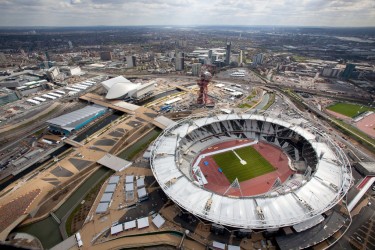
London 2012 Olympic Games Stadium

London 2012 Olympic Games Stadium

Only a lucky few million people will actually attend the London 2012 Olympic Games, whereas billions of people all over the world will feel part of the event as a result of the immediacy of live television.

The following 4 minute video produced by the European Space Agency, a leading light in the development of satellite communications, gives an overview of how this is achieved:

Loading…


In the coming days the Olympic Games will attract a worldwide audience and from wherever we are on the globe we’ll all be able to follow the events in London. This is a fantastic showcase for space technologies which are often unknown and taken for granted.

The evolution of space activity, and in particular, satellite telecommunications, has transformed the planet into a big stadium where everybody has a front seat. This video recalls the extraordinary progresses made in the relay of sports and the new tools now available for professionals and spectators around the world.
More background information can be found on: http://www.esa.int/esaTE/index.html
50 Years Ago Today – The Birth of Satellite Communications

First Satellite TV in the UK received by Goonhilly
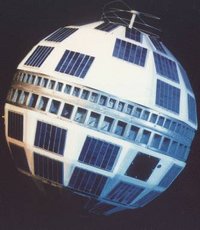
The Telstar Satellite

The Telstar Satellite

10th July 1962 marked the birth of satellite communications. Exactly 50 years ago today the Telstar satellite commenced its journey into space from Cape Canaveral and became the first ever active commercial communications satellite. It carried the first live trans-Atlantic TV broadcasts.

These days, satellite launches are commonplace and polar orbits, MEO orbits, Molniya orbits, Tundra orbits and the geostationary orbit are filled with communications satellites operating at frequency bands from UHF through L-Band, S-Band, C-Band, X-Band, Ku-Band, Ka-Band and above. As at 1st January 2012 there were 419 satellites operating in the geostationary orbit alone.

I’m not writing this as a “third party commentator”, but as someone who has been intimately involved with and has contributed to the development of satellite communications [Read more…]

7 MINUTES OF TERROR

Seven minutes of terror when the Mars Curiosity (MSL) rover undertakes its planned descent to the Martian surface …

Team members at NASA’s Jet Propulsion Laboratory share the challenges of the Curiosity Mars rover’s final minutes to landing on the surface of Mars

Now that’s what I call systems engineering!