Satcom September – ICSSC 2015

So what is ICSSC 2015 and why is it one of the most prestigious events in the satellite communications calendar?

aiaa_logoThe AIAA ICSSC conference is held at a different location every year and each event focuses on a specific, relevant satellite communications theme. The conference papers are predominantly technical and engineering based and attract top-class submissions which are peer-reviewed prior to acceptance.

The previous two conferences were held in San Diego, California and Florence, Italy respectively. This year it’s the turn of Australia and ICSSC 2015 will be the 33rd American Institute of Aeronautics and Astronautics (AIAA) International Communications Satellite Systems Conference (ICSSC), to be held at QT Surfers Paradise, 7 Staghorn Avenue, Surfers Paradise, QLD 4217, Australia, from September 7 to 10, 2015.
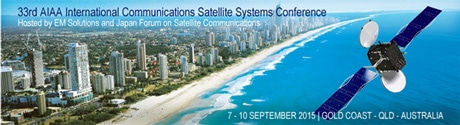

33rd AIAA ICSSC Conference Website

The 2015 ICSSC conference is co-hosted by Australian based EM Solutions and the AIAA Japan Forum on Satellite Communications with the conference theme High Throughput Satellites, Other Performance Advances and Applications – Keeping Satellites Essential in a Broadband World.
The theme has been chosen to emphasize that, even though fibre networks tend to dominate discussion of broadband telecommunications, this is a wireless world and satellites remain the only platform to offer communications anywhere, anytime.

The conference program which runs over 4 days and includes 70 speakers is available to view online here

The conference itself will be preceded on Monday 7th September by a Colloquium entitled Architectures and Technologies for Next Generation High Throughput Satellite Systems, which will review what will maximize the economic return from the industry’s space investment. The Colloquium will host a panel of experts representing the multiple aspects of ground and satellite architectures, in a workshop-style forum. The Colloquium is structured so attendees can actively engage with the panel, and better learn about how current and future technologies will realize next generation high throughput satellite systems.

The ICSSC 2015 Pre-Conference Colloquium Panelists will include:

• Jacques-Samuel Prolon, General Manager Kacific Broadband Satellites, Emerging Satellite Services
• Andrew Johnson, Managing Partner of the Delta Systems Group formerly Orion, Regional Satellite Services
• David Ball, former CTO Newsat, Global Satellite Solutions
• Hector Fenech, Director of Future Satellite Systems, Eutelsat, Global Satellite Solutions
• Erwin Hudson, VP and Program Manager ViaSat, former CTO Wildblue Communications, Broadband Ground Services
• Rob Singh, VP Business Development and Comm Systems Architect, SSL, Broadband Satellite Systems Manufacturer

Following the Conference a Technical Networking Day has been organised for Thursday, 10th September. Now I’m certain that this will be extremely popular with delegates, particularly those who have not visited Australia before. This day has three completely contrasting venues which must surely cater for all tastes.

It’s a tribute to the conference organisers AST Management Pty Ltd and the conference secretariat to have organised the following three superb events:
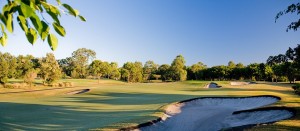
Golf - The Glades Gold Club

Golf – The Glades Gold Club

The Glades Golf Club boasts the reputation as one of Australia’s most prestigious resort golf courses and is located right here on the Gold Coast. Designed by champion Australian golfing icon, Greg Norman, the course is typical of his trademark aggressive layouts offering golfers a challenging round of golf within visually stunning surrounds.

Tamborine Tracks Tours - Mt Tamborine National Park

Tamborine Tracks Tours – Mt Tamborine National Park

A fully guided and all-inclusive tour into the Gold Coast Hinterland. Visit Tamborine National parks with an award winning, family run 4WD tour company.
Experience secluded hillside trails, private venues, rainforest, waterfall and stunning panoramic views with a timetable that doesn’t feel rushed but has you seeing as much as you can in the time.
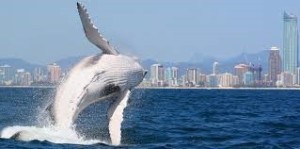
Whale Watching Cruise

Whale Watching Cruise

See the magnificent humpback whales breach. Hear their great tails slap the water. Feel the waves rock the boat. Marvel at their playfulness. Embark on an unforgettable whale watching cruise past homes of the rich & famous to the deep blue waters of the majestic “Humpback Whale Highway”.

Full details can be found here – but how on earth does one choose between them? For me, it’s the Tamborine Tracks Tour. Why? Because it just so happens that I’m lucky enough to live up in that splendid, unspoiled rainforest. I can guarantee that this tour will give international delegates in particular a real feel for “Country Australia” and Australian friendliness and hospitality!

Oh, and speaking of “Country Australia” perhaps this is why OPTUS is the conference Gold Sponsor – they’re keeping both urban and country Australia seamlessly connected together and integrated with the wider world by satellite!

Satcom September – VSAT 2015

There are many satellite communications conferences and exhibitions which take place every year all over the globe – it’s an international business after all. For some reason September would appear to be the busiest month, perhaps because it’s “back to work” following the northern hemisphere’s summer vacation period.

Whatever the reason, September is a busy month. In a sequence of posts of which this is the first I’ll highlight some of the main events taking place in locations as diverse as London, Amsterdam, Seoul Korea, Maceio Brazil, The Gold Coast, Australia and more. So here’s the first, VSAT 2015 in London, England:

VSAT 2015

VSAT 2015 is the annual meeting place for the major decision makers from across the industry to focus on key issues, discuss the latest industry developments and identify opportunities across the globe.

Whether you want to catch up with your industry peers, meet potential and existing business partners or learn about the industry and market developments
VSAT 2015 is the premier industry event for you, Featuring Keynotes from

• Andy Lucas, CTO, Harris CapRock
• Morten Hansen, CTO, RigNet
• Aditya Chatterjee, CTO, Global Eagle Entertainment
• Francois Rodriguez, CSO / CMO, SITA OnAir
• Alain Bertrand, CTO, Airbus Defence & Space

There are new keynotes, one-on-one meetings and to cap it off an end-user summit.

Download the conference programme now

For those who are not aware VSAT is the acronym for Very Small Aperture Terminals, be they land, air or maritime-based. There are well over 500,000 in operation today.

VSAT 2015 is the 17th such annual event in the series and will be held in the centre of London, England between 16th and 18th September 2015.

A personal perspective:
I’d like to take this opportunity to highlight the prime partner of VSAT 2015, Comsys.
Comsys WebsiteThe founder, Jeremy Rose, established his company in 1982. He (and his partner then, Simon Bull) and I go right back to those very early days. My company (Communication Systems Research Ltd) developed one of the very first VSAT systems called Pandata™ back in the 1980s. Jeremy’s team and mine fought the tide of the then-entrenched telecoms administrations who saw VSATs as a threat to their established business models.

How that tide has turned over the years! And much of that is due to the work and tenacity of Jeremy and Comsys. Jeremy, you’re a credit to the VSAT industry.

The Power of SIGINT

As a youngish engineer in the 1980s I’d already had plenty of experience in exploiting the properties of communications signals to solve complex problems. I’d been responsible for planning and executing the in-orbit testing of the European Space Agency’s (ESA) first 3-axis stabilised Ku-Band communications satellites, OTS and ECS.

In-orbit testing is a very different game to just designing and using communications satellites on a day-to-day operational basis. The earth stations involved are actually precise, calibrated measuring instruments and one has to be very inventive about how one can exploit the signals and signal processing to understand what is going on, particularly during anomaly investigations.

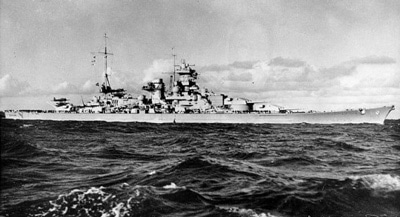
The Scharnhorst at Sea

The Scharnhorst at Sea

So here was I in the 1980s working with a major UK defence contractor on a project. One member of this small team was a senior engineer, close to retirement, who had been heavily involved in signals intelligence (SIGINT) during WWII. It was he who conveyed to me the following account of his involvement in the fate of the German battleship, Scharnhorst, in WWII. It’s a fascinating story and despite some searching I haven’t been able to corroborate it nor find any reference to the specifics, so I’ll record it here as-told for posterity:

The Scharnhorst had been causing havoc on allied North Atlantic convoys in 1940 and 1941, and Wikipedia’s description The German Battleship Scharnhorst is very comprehensive. An RAF air raid on 24th July 1941 caused major bomb damage to the ship and it limped into the German-controlled French port of Brest on 25th July where it went into dry dock for extensive repairs.

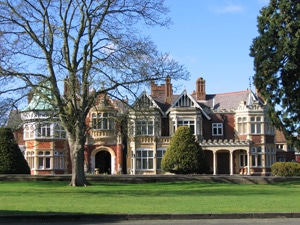
Bletchley Park Mansion Today

Bletchley Park Mansion Today

The Scharnhorst and its state of readiness were obviously of intense interest to the allies and its communications were the subject of continuous monitoring. Most folks today will have heard of Bletchley Park and its role in breaking and exploiting the German (and other) encrypted communications. There are published reports of the Bletchley Park teams using the ENIGMA decrypts of the Scharnhorst’s communications (COMINT) to gather intelligence on the progress of the repairs. What are not reported are the other related activities of ELINT and SIGINT, and this is where my colleague comes in.

A Typical WWII HF Radio Monitoring Station

A Typical WWII HF Radio Monitoring Station

Bletchley Park carried out other functions in WWII and was but one of a number of related intelligence establishments. My colleague worked at a HF radio station outpost on a hilltop somewhere in England which was continuously monitoring the Scharnhorst’s radio transmissions.
One of the things he was monitoring was the close-to-carrier spectrum of the Scharnhorst’s transmissions. He wasn’t interested in the COMINT, but the deep behaviour of the RF signal itself.

Now for the techy bit: The RF carrier is not a perfectly clean CW signal by any means. It carries information about how the signal itself was generated, and what has happened to it during its generation, upconversion, transmission and downconversion by the monitoring station. What my colleague observed was that, in dry dock, the Scharnhorst was running on shore-based power – not its own generators. The phase noise / spurious signal sidebands were at 50Hz from the carrier signal. Lo and behold, one night some time before the 8th February 1942 these sidebands suddenly jumped in frequency to 400Hz. The Scharnhorst had switched to its own internal power, and was therefore in the water and preparing to leave Brest!

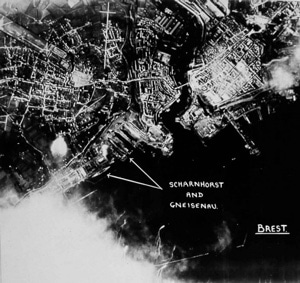
Scharnhorst and Gneisenau at Brest

Scharnhorst and Gneisenau at Brest

Obviously, this information was immediately fed into the system and resulted in a step up of activity by the allies. On 8th February 1942 a photo reconnaissance mission detected that the Scharnhorst plus two sister ships, the Gneisenau and the Prinz Eugen were in the Brest harbour area and preparing to leave. They left at 23:00 on 11th February 1942 (some reports state Scharnhorst cast off at 21:14 British time) to run the gauntlet of the English Channel (codename Operation Cerberus) and the rest is history.

That escape from Brest and the subsequent failure of allied electronic warfare (EW) systems to detect them is described in great detail in the book “Battle Scars of Military Electronics – The Scharnhorst Breakthrough” by Sir Robert Watson-Watt of Radar pioneering fame.

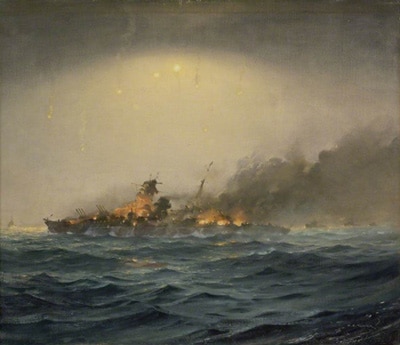
The Sinking of the Scharnhorst

Sinking of the Scharnhorst, 26 December 1943
by Charles E. Turner

The above painting is in the UK’s National Maritime Museum, here.

Relevance in Today’s World
Apart from this story being a record of a particular individual’s contribution in the SIGINT field over 70 years ago, there are lessons here for today. That very same technique can be employed to narrow down the geographical source of interfering signals in satellite communications systems. It is but one tool that can be used in the fight against the curse of satellite interference.

In financial terms alone satellite interference (intentional or otherwise) costs the industry many tens of millions of dollars each year and is the subject of a number of mitigation programmes by the major satellite operators, a major one being the Satellite Interference Reduction Group.

Satellite Interference Reduction GroupThe Satellite Interference Reduction Group (IRG) is the global industry organisation with the mission of combating and mitigating radio frequency interference (RFI) for an interference-free satellite frequency spectrum.

With a decent size antenna, a low phase noise downconverter and a spectrum analyser one can easily determine the frequency of the power grid supplying the interfering transmitter. Is it in a 50Hz country, a 60Hz country, on a ship, on an aircraft or even space-based? One can glean even more information than this, but that is beyond the scope of this article.

And remember, you heard it here first!

Copyright 2015 Satellite Spy (Dr Bob Gough)